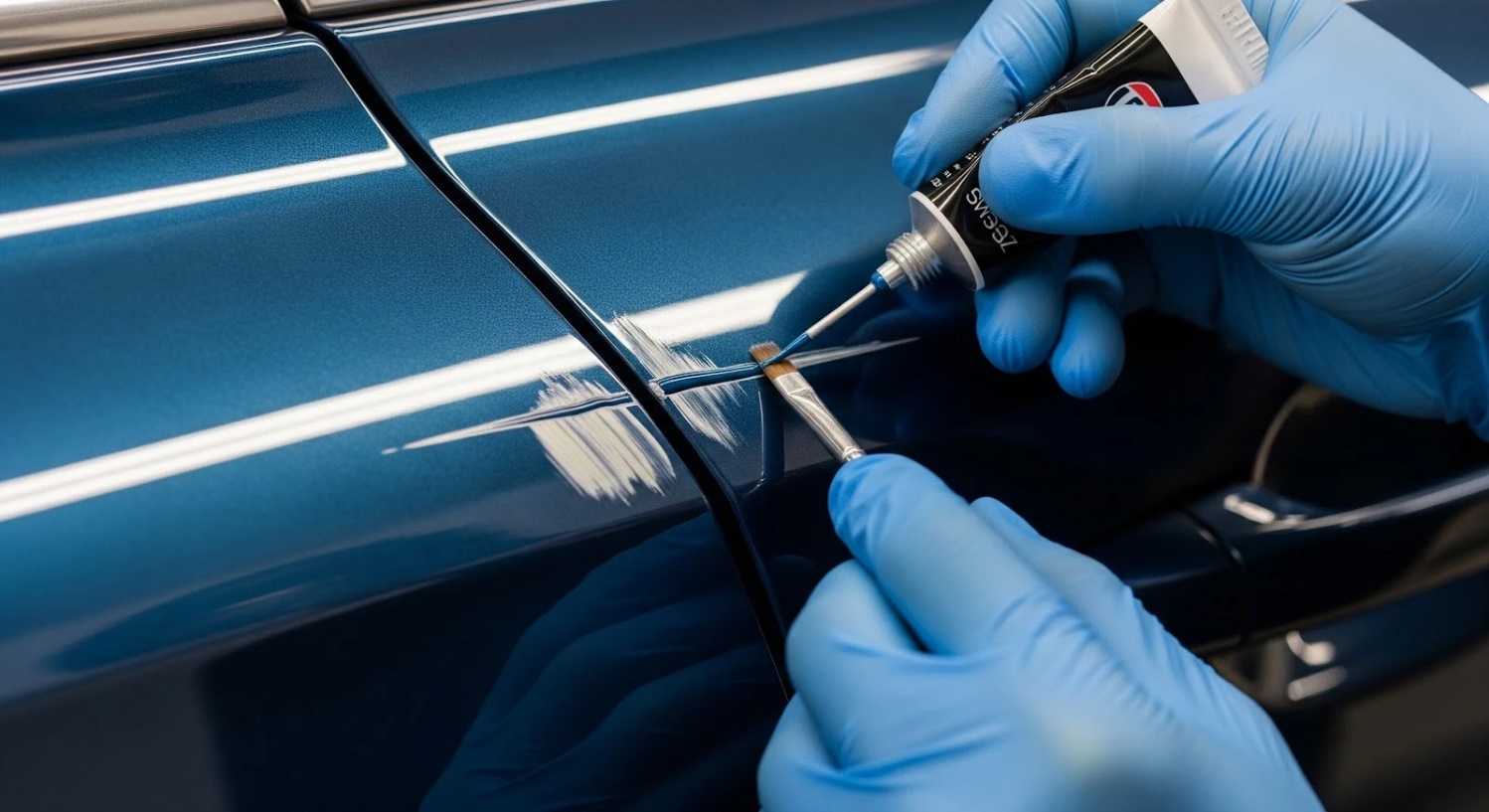
Even a minor scratch may not seem like much, until you are about to sell your car and suddenly it becomes the only thing you (and purchasers) notice. The positive aspect is that most minor scratches are cheap to fix, and in cases where they aren’t, you can usually make a clever decision with some quick calculations.
This guide will take you through normal pricing, what increases or decreases costs, and how to determine whether it is worth repairing a small scratch before listing your car.
Identifying Scratch Types: Clear Coat vs. Deep Paint Scratches
“Small” typically refers to length and depth, though depth is more important than size. A scratch may appear small on the surface, but if it cuts through the layers of paint, it might cost a lot to fix.
Here is an effective way to evaluate the damage:
- Clear-coat scratch: A light mark that does not catch your fingernail (usually buffable).
- Base-coat scratch: Your fingernail catches on it, and it appears colored or dull (requires touch-up or refinishing).
- Through-to-metal/plastic: You can see primer, bare metal, or black plastic (requires extra protection and paintwork).
A rapid exam: Wipe a clean fingernail over the scratch. If your nail slides over it smoothly without catching, you are frequently in the cheapest repair grade.
Average Car Scratch Repair Costs by Method
Prices depend on location, vehicle color, shop quality, and how picky you are about a perfect match. Nevertheless, the majority of small scratch fixes can be categorized into several buckets:
1) Buffing and Polishing (Clear Coat Scuffs)
A specific polish will cost about $50–$150, or between $150–$400 if the shop includes it as part of a larger paint-correction package. This usually offers the best value for superficial scratches.
2) Touch-Up Paint (Thin Scratches or Chips)
A homemade touch-up pen costs between $15–$40. Depending on color matching and whether they wet-sand and blend, a professional touch-up service can cost between $100–$300.
3) Spot Repair / SMART Repair (Localized Refinishing)
For scratches that require real paintwork but not a complete panel respray, most shops offer localized refinishing. A common range is $200–$600. This is usually a win-win for sellers: you get good results without paying the price of a full repaint.
4) Full Panel Respray (Deep Scratches and Blending)
In the case of a deep scratch, damage on a body line, or difficult-to-mix paint (some whites, reds, pearls, and metallics), a shop might suggest repainting the whole panel. That usually costs in the range of $600–$1,500, and sometimes higher for luxury cars.
Another pricing fact: If the scratch is on a bumper, prices may be cheaper since bumpers are often simpler to replace and paint. However, if the bumper has sensors or high-tech driver-assistance systems, labor costs may skyrocket.
DIY vs. Professional Scratch Repair: Best Options for Sellers
DIY Scratch Repair
This may work well when the scratch is light and you feel comfortable doing simple detailing. Even an unwashed car can be transformed with a thorough wash, clay bar, and polish. There is little risk as long as you use mild products and be sure to follow the instructions.
Professional Body Shop Repair
This is worth seeking when the scratch catches a fingernail, is white/gray, or seems to break through the color layer. At this stage, messy touch-up blobs or sanding marks from a DIY attempt can actually make the car appear worse to a customer.
Comparison Tip: Request quotes from two sources: a traditional body shop and a mobile detailer who offers car scratch repair. The latter can be cheaper and quicker for minor problems, but a full body shop will shine if structural damage or larger refinishing is needed.
Should You Fix Scratches Before Selling? A Cost-Benefit Analysis
Most sellers are concerned with one thing: will you get your money back?
Use this quick rule of thumb:
Repair ROI=Expected price increase−Repair cost
When the outcome is positive (or even close to it), the repair is often justified—particularly if it helps the car sell faster.
To estimate the price increase, think about buyer psychology rather than book value. Scratches cause suspicion: “If this is damaged, what else didn’t get done?” Buyers use minor marks to negotiate the price down.
Repairs are likely to pay off for:
- Private sale listings: When selling directly to a buyer, you have more competition.
- Mid-range second-hand cars: Condition is a key differentiator among similar listings.
- First impressions: Scratches on doors, bumpers, and handles are very prominent in pictures.
Repairs are NOT likely to pay off for:
- Older/high-mileage cars: Buyers are willing to tolerate defects and might not pay extra for a fix.
- Severe damage to several panels: The repair cost may be higher than any increase in value.
- Trade-ins at large dealers: They recondition cars at wholesale prices and likely won’t give you full credit for your repairs.
A pragmatic compromise: If your car appears neglected in photos due to a scratch, it is likely worth fixing. Online listings are essentially “first dates,” and buyers make quick judgments.
Prioritizing Repairs: Which Scratches to Fix First
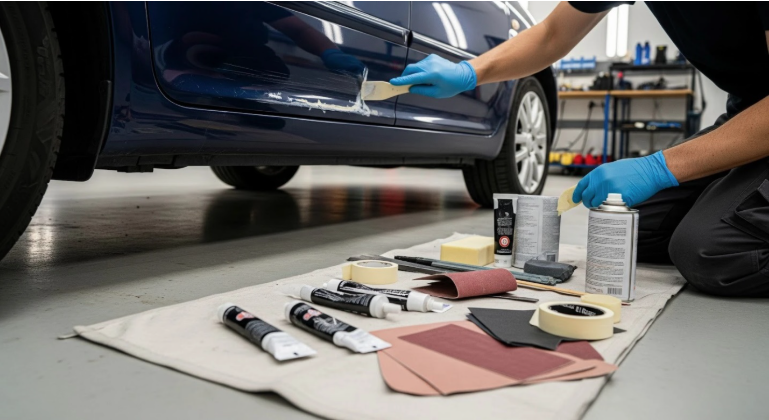
If you have limited time or money, do not pursue perfection. Emphasize what the buyers will notice most.
Focus on:
- Hero Zones: The front bumper, front quarter panel, and driver’s door (the main photo areas).
- High Contrast: Light scratches on dark cars and dark scuffs on white cars.
- Rust Risks: If the scratch goes down to the metal, you must cover or fix it to avoid rust spreading.
If a scratch is small and low on the rocker panel, most buyers won’t mind. If it is on the driver’s door at eye level, it will be a point of negotiation virtually every time.
How to Get an Accurate Scratch Repair Estimate
If the scratch can be seen by the shop in person, that is best, but you can speed up the process with great photos.
When requesting estimates via email/text:
- Take pictures in natural light (avoid harsh shade).
- Take photos from 1–2 meters away and close-up.
- Add a “pan shot” showing the entire panel so the shop understands blending needs.
- Ask if the quote is for a spot repair or a full panel repaint, and why.
- Verify warranty conditions and turnaround time.
Also, ask if they can “minimize” the scratch rather than repaint it. In some instances, a shop might jump to painting when a polish could hide the majority of the damage for a fraction of the cost.
Conclusion: Fix Scratches to Increase Buyer Trust
A little personal financial planning now can keep the repair bill from eating into your resale profit later. A minor scratch can be cheap to fix—light scratches can often be resolved for under $150, whereas more severe ones might fall in the $200–$600 category. The actual issue is not whether it can be fixed, but whether fixing it will make buyers trust the car more and agree to your asking price.
If the scratch is visible in photos, is at eye level, or makes the car appear poorly maintained, it is often worth the money to fix it before selling. Correcting the issue allows you to reveal the car with confidence.
