Brakes don’t just keep your car under control they protect everyone who shares the road with you. Yet many drivers wait for a loud squeal or a dashboard light before taking action. Understanding how your brake system works, which symptoms matter most, and what a thorough inspection includes can help you make timely, confident decisions. This guide breaks down pads, rotors, brake fluid, and anti-lock braking systems (ABS) in plain language, and it highlights driving habits that can extend the life of your brakes through Ohio’s freeze–thaw cycles and stop-and-go traffic.
How Your Brakes Actually Stop the Car
Modern vehicles rely on hydraulic disc brakes at the front and often at the rear. When you press the pedal, a master cylinder pushes brake fluid through lines to calipers. Caliper pistons clamp brake pads onto spinning rotors, converting kinetic energy into heat through friction. That friction pad against rotor is what slows the wheels. Brake fluid is crucial here: it must remain incompressible and resist boiling, because air or moisture in the system can lead to a soft, spongy pedal and longer stopping distances.
Most vehicles also have ABS. During a hard stop, ABS rapidly pulses the brakes to prevent wheel lockup, helping you maintain steering control. If the ABS light is on, the base brakes can still work, but the system may not assist during emergency stops or slick-road braking. For a quick overview of typical components and services involved in brake work, see https://clintonvilleauto.com/services/brake-repair, then use the sections below to learn what to watch for and how shops diagnose issues.
Warning Signs You Shouldn’t Ignore
Squealing while braking often points to worn pads or a built-in wear indicator contacting the rotor. A grinding or growling noise may mean the friction material is gone and the metal backing plate is chewing into the rotor this can quickly increase repair costs. Vibration or pulsation through the pedal typically indicates rotor thickness variation or hot spots, sometimes caused by overheating or uneven pad deposits. A soft or sinking pedal may signal air in the lines, deteriorated brake fluid, a failing master cylinder, or a leak. If the vehicle pulls to one side under braking, a sticking caliper, collapsed hose, or uneven pad wear could be the culprit.
Dashboard indicators matter, too. An illuminated brake warning light can point to low fluid, a parking brake left slightly engaged, or a hydraulic issue. An ABS light suggests an electronic or sensor-related fault. Address warning lights promptly delays can turn a simple fix into a more involved repair.
What a Quality Brake Inspection Covers
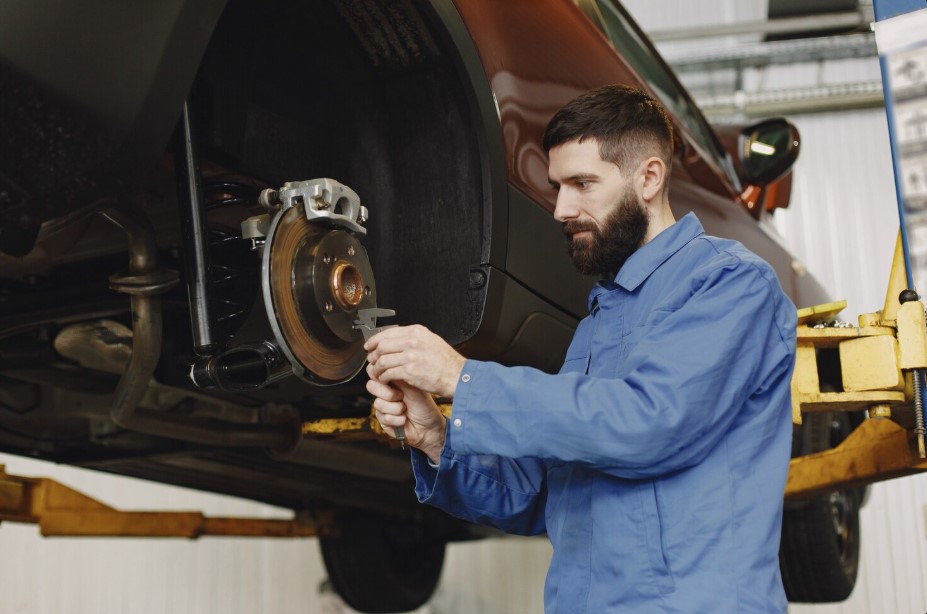
A thorough inspection starts with removing the tires and wheels to access the pads and rotors. Technicians measure pad thickness and note any uneven wear, glazing, or contamination. They inspect rotors for scoring, cracks, rust scaling on the edges, and excessive runout or thickness variation. Calipers are checked for smooth piston movement and even clamping force, and slide pins are verified to move freely with proper lubrication. Flexible brake hoses should show no cracking or bulging, and metal lines are checked for corrosion or wet spots indicating leaks.
The brake fluid reservoir should be inspected for level and condition. Fresh fluid is typically clear to light amber; dark, murky fluid can indicate moisture contamination. Many manufacturers recommend periodic fluid replacement because brake fluid absorbs moisture over time, which lowers its boiling point and can corrode internal components. The parking brake, whether cable-actuated or electronic, should also be verified for proper engagement and release. Local shops, including Clintonville Automotive Repair Service (often referred to as C.A.R.S.), regularly see corrosion-related issues in regions that use road salt another reason a wheels-off inspection is wise before long trips or seasonal changes.
Pads, Rotors, and ABS: Repair Options in Plain English
Brake pads come in several common compounds. Semi-metallic pads offer strong bite and heat resistance but can be noisier and produce more dust. Ceramic pads are usually quieter, dust less, and can be gentler on rotors, but they may not handle repeated high-heat events as well as some performance-focused formulations. The right choice depends on your driving style, vehicle weight, and noise preferences. If your vehicle tows or sees steep hills, you may want a pad that manages heat better; for urban commuting, low-dust, quiet operation may top the list.
Rotors can sometimes be resurfaced if they remain within thickness and runout specifications and the friction surface can be restored smoothly. However, replacement is the more common route when rotors are too thin, heat-checked, or heavily corroded. You may see coated rotors that resist rust on non-friction surfaces, which can help in salty climates. For ABS-related issues, diagnostics often involve reading trouble codes, testing wheel speed sensors, verifying sensor tone rings, and checking wiring integrity. A squeal won’t trigger an ABS light, but a damaged sensor or broken wire might so electronic and mechanical problems call for different testing methods.
Habits That Protect Your Brakes Through Ohio Seasons
Gentle, early braking reduces heat buildup and wear on pads and rotors. Leave extra distance in traffic, especially in wet or icy conditions when ABS may need to intervene. When new pads and rotors are installed, follow the shop’s bedding procedure usually a series of moderate stops from varying speeds to transfer an even layer of pad material onto the rotor. Proper bedding can reduce noise and pulsation later on.
Brake fluid maintenance matters. Because fluid absorbs moisture, periodic replacement can help prevent internal corrosion and pedal fade during hard stops. Keep tires properly inflated and aligned; a crooked alignment or uneven tire wear can make brakes work harder on one side, accelerating pad wear and causing pull. In winter, rinsing wheels and undercarriage can help wash away salt, which may otherwise promote corrosion on rotors, calipers, and brake hardware. Finally, listen for changes: a new noise, a slight shimmy, or a longer pedal travel is your cue to schedule an inspection before it becomes a safety risk.
Staying proactive with your brakes isn’t complicated you need a working knowledge of key symptoms, what an inspection should include, and the main repair choices you’ll face. By paying attention to early signs, keeping up with fluid service, and driving smoothly, you can extend component life and keep emergency stops predictable. If something feels off, don’t wait for a louder noise or a brighter dash light; getting the system checked early is almost always the safer, more cost-effective move.
