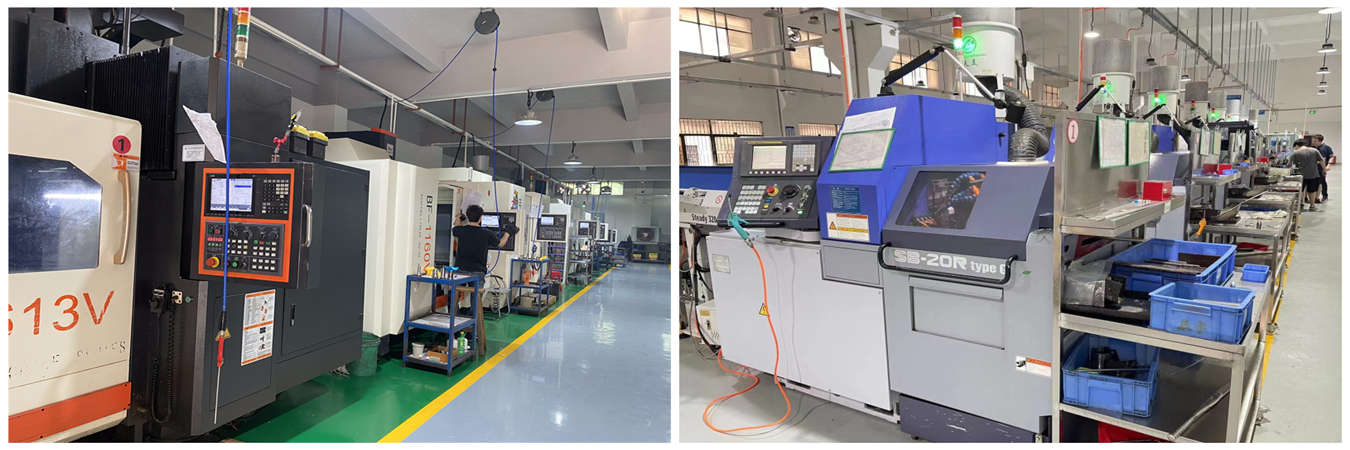
The automotive industry is undergoing one of the biggest engineering transitions in decades. Electrification, lightweight materials, autonomous systems, and higher efficiency standards are forcing manufacturers to rethink how vehicle components are designed and produced. As vehicle systems become more complex and performance requirements continue rising, precision machining has become increasingly important across modern automotive manufacturing.
Today’s automotive components are expected to deliver tighter tolerances, improved durability, lower weight, and greater consistency than ever before. Whether the application involves electric drivetrains, braking systems, fuel delivery assemblies, steering components, or sensor housings, manufacturing precision directly affects product reliability and long-term vehicle performance.
For automotive suppliers and OEMs, this has created growing demand for advanced CNC machining solutions capable of supporting both high precision and scalable production.
Automotive Manufacturing Is Moving Toward Higher Precision
Traditional automotive manufacturing focused heavily on mass production efficiency. While efficiency remains critical, modern vehicle engineering now places much greater emphasis on precision, material optimization, and system integration.
Several industry trends are driving this shift:
Electric vehicle development
Lightweight structural design
Advanced safety systems
Increased sensor integration
Higher thermal management requirements
More compact mechanical assemblies
These changes require manufacturers to produce components with increasingly strict dimensional control.
For example, electric vehicle systems often rely on compact assemblies with minimal tolerance variation. Battery housings, motor components, cooling system parts, and electronic mounting structures all require stable machining processes to ensure assembly consistency and operational reliability.
At the same time, modern vehicles include significantly more electronic and sensor-based systems than previous generations. These systems often require precision-machined housings and connectors capable of maintaining exact positioning and alignment.
As a result, CNC machining has become one of the core manufacturing technologies supporting automotive innovation.
Why CNC Machining Remains Essential in Automotive Production
Despite advances in casting, additive manufacturing, and automated forming technologies, CNC machining continues to play a central role in automotive manufacturing because of its flexibility and precision.
CNC machining supports the production of both prototype and production-level components while maintaining repeatable quality standards.
Common automotive parts produced through CNC machining include:
Transmission components
Brake system parts
Engine fittings
Suspension components
Fluid control connectors
Sensor housings
Steering system parts
Turbocharger components
EV drivetrain components
The ability to maintain tight tolerances across large production volumes makes CNC machining especially valuable for automotive OEM supply chains.
Manufacturers specializing in automotive precision CNC machining are increasingly supporting vehicle manufacturers with complex metal components that require both dimensional accuracy and long-term production consistency.
The Role of Swiss Machining in Automotive Components
One area seeing strong growth is Swiss CNC machining for precision automotive parts.
Swiss machining technology is particularly effective for small, detailed, and high-precision components because the material is supported near the cutting area during machining. This reduces vibration and improves dimensional stability.
In automotive applications, Swiss machining is commonly used for:
Precision shafts
Connector pins
Fuel system components
Sensor fittings
Small threaded parts
Hydraulic system fittings
Electronic connector housings
As vehicle systems continue becoming smaller and more integrated, manufacturers increasingly rely on machining processes capable of producing intricate geometries with repeatable precision.
Swiss machining also supports efficient high-volume production, making it suitable for automotive programs that require both accuracy and scalability.
Material Challenges in Automotive Manufacturing
Modern automotive engineering uses a wide range of materials, each presenting unique machining challenges.
Common automotive machining materials include:
Aluminum alloys
Stainless steel
Titanium
Brass
Copper alloys
Carbon steel
Engineering plastics
Lightweight materials have become especially important as manufacturers work to improve fuel efficiency and EV battery performance.
Aluminum components, for example, are widely used in structural and thermal management applications because of their low weight and corrosion resistance. However, maintaining surface quality and dimensional stability during high-speed machining requires proper tooling and process optimization.
Similarly, stainless steel and hardened alloys used in safety-critical systems demand careful control of cutting parameters and inspection procedures.
This is why automotive OEMs increasingly prefer manufacturing partners capable of providing engineering support alongside production capability.
Precision and Consistency Are Equally Important
Automotive manufacturing is not simply about producing accurate parts once. The real challenge is maintaining consistency across thousands or even millions of components.
Even minor dimensional variation can create assembly problems, vibration issues, premature wear, or system instability.
To maintain quality standards, advanced machining suppliers are investing in:
Automated inspection systems
In-process measurement technology
Multi-axis CNC equipment
Statistical process control
Production traceability systems
Tool life monitoring
These technologies help manufacturers improve repeatability while reducing production risk.
Automotive OEMs are also placing greater emphasis on supplier process capability and long-term manufacturing stability, especially for components used in electric vehicles and advanced driver assistance systems.
The Importance of Engineering Collaboration
Another major trend within automotive manufacturing is earlier collaboration between design teams and machining suppliers.
Manufacturing input during product development can help optimize:
Machinability
Tolerance strategy
Material selection
Production cost
Assembly efficiency
Surface finish requirements
This collaborative approach helps reduce redesign cycles and improves scalability during mass production.
Companies producing precision automotive components increasingly provide engineering-driven manufacturing support rather than functioning solely as part suppliers.
Technical resources explaining machining methods, tolerance control, and production strategies are becoming increasingly valuable for automotive engineering teams evaluating component suppliers. Detailed guides covering CNC machining for automotive parts can help manufacturers better understand how machining processes influence performance, quality, and long-term production reliability.
The Future of Automotive CNC Manufacturing
Automotive manufacturing will continue evolving rapidly over the next decade.
Electric mobility, connected vehicles, lightweight engineering, and autonomous systems will place even greater demands on component precision and manufacturing consistency.
Future automotive production will likely require:
Smaller and more complex machined parts
Higher tolerance stability
Faster prototyping cycles
Greater automation
Improved material efficiency
Stronger supplier engineering support
CNC machining is expected to remain one of the key enabling technologies behind these developments.
As automotive systems become more advanced, manufacturers capable of combining precision machining, engineering expertise, and scalable production capability will play an increasingly important role throughout the global automotive supply chain.
