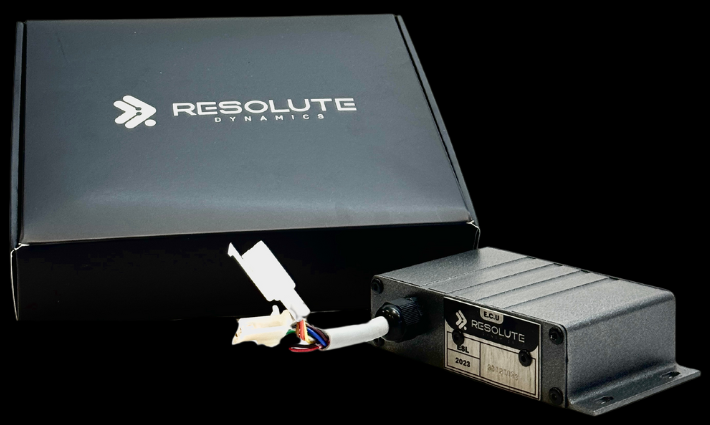
Walk into any commercial vehicle workshop in Singapore today and you’ll see the same scene playing out — mechanics installing, calibrating, and inspecting a small electronic device that most road users never think about. It sits tucked away near the engine bay, connected to the vehicle’s electronic control unit, and rarely makes itself known to the driver. Yet this single component now plays a defining role in how the country’s trucks, buses, and commercial vans operate every day.
The speed limiter has come a long way from the crude mechanical governors of decades past. What started as a simple way to physically restrict throttle travel has evolved into a sophisticated electronic system that integrates with engine management, GPS, and fleet telematics. It’s a quiet revolution in the automotive parts world, and Singapore has become one of the more advanced markets for this technology in the region.
For workshop owners, parts suppliers, and fleet operators evaluating their options, the choice of a speed limiter singapore regulators approve and technicians can service properly has become as important as choosing the right brake pads or clutch components. Get it right, and the vehicle runs cleaner, safer, and more economically. Get it wrong, and you’re looking at compliance issues, repeat workshop visits, and frustrated drivers.
The Anatomy of a Modern Speed Limiter
Understanding what a speed limiter actually is helps explain why the choice matters. At its core, the device is a small electronic control module — typically the size of a paperback book — that interfaces with the vehicle’s engine management system.
The unit reads vehicle speed from the existing speed sensors, compares it against a programmed threshold, and intervenes when the vehicle approaches that threshold. Intervention happens through fuel delivery modulation, throttle response control, or both, depending on the system architecture and the vehicle’s drivetrain.
Around that core electronic logic sit a few critical supporting components. Sealed wiring harnesses prevent tampering. Tamper-evident enclosures log any attempt to open or bypass the unit. Many modern systems include cellular or Bluetooth modules for remote diagnostics, GPS receivers for location-based speed profiles, and CAN bus integration for two-way communication with the rest of the vehicle’s electronics.
How the Technology Has Evolved
The earliest speed governors were entirely mechanical. A spring-loaded device would limit throttle cable travel beyond a certain engine RPM, effectively capping speed by capping power. The systems worked, but they were crude. They couldn’t adapt to different conditions, they wore out predictably, and they were relatively easy to bypass.
The shift to electronic limiters in the 1990s and 2000s changed the game. Once the limiter could read electronic signals from the engine and intervene at the ECU level, the entire approach became more precise. The limiter could now respond to actual vehicle speed rather than just engine RPM, accounting for gear ratios and driving conditions.
The current generation goes further still. Today’s units don’t just cap speed — they log everything. Speed over time, throttle inputs, GPS position, gear selection, and braking events can all be recorded and uploaded to a central dashboard. The limiter has evolved from a passive restriction into an active source of operational data.
Why Singapore Adopted Early
Singapore has been a relatively early adopter of speed limiter technology in commercial vehicles, and there are good reasons for that. The city-state’s road network is dense, traffic enforcement is rigorous, and the consequences of accidents involving heavy vehicles in urban areas are particularly severe.
The Land Transport Authority maintains specific speed ceilings for heavy goods vehicles, buses, and certain other commercial categories. Enforcement is multi-layered — fixed cameras, average-speed sections on expressways, and routine inspections all contribute to a system where compliance isn’t optional.
For operators, that environment has made speed limiter installation a baseline requirement rather than an optional upgrade. And because the regulatory framework is mature, the supporting ecosystem of parts suppliers, certified installers, and calibration specialists has developed alongside it.
What Workshops and Installers Look For
From a workshop perspective, not all speed limiters are equally easy to live with. Installers who handle these systems day in and day out tend to develop strong views on what makes a good unit.
Clean Vehicle Integration
The best limiters integrate with the vehicle’s existing electronic architecture without throwing fault codes, triggering warning lights, or interfering with manufacturer diagnostics. Poor integration creates phantom faults that drivers report and workshops then have to chase down.
Clear Diagnostic Access
When something does go wrong — and electronics occasionally fail — being able to read fault codes and historical data from the limiter is essential. Systems with proper OBD-style diagnostic interfaces save hours of troubleshooting compared to closed, proprietary units.
Sensible Calibration Procedures
Speed limiters need recalibration after tyre changes, axle work, or any modification that affects the relationship between wheel rotation and actual road speed. A unit with a clear, documented calibration procedure is much easier for a workshop to support than one requiring specialist tools or vendor-only access.
Reliable Hardware
Singapore’s climate is hard on automotive electronics. Heat, humidity, and constant vibration all take their toll. Speed limiters built with sealed housings, automotive-grade components, and proper EMC protection last longer and cause fewer warranty issues than budget alternatives.
Common Issues and How to Spot Them
Anyone working with these systems regularly comes to recognise certain recurring issues. Knowing what to look for can save time and prevent problems from escalating.
Inconsistent speed cutoff is one of the more common complaints. If a vehicle starts hitting its limit at noticeably different speeds on different days, the cause is usually either a calibration drift after tyre changes or a sensor signal issue. Both are fixable, but ignoring them leads to bigger problems later.
Fault codes that won’t clear can indicate either a genuine hardware issue or a wiring problem at the limiter’s CAN bus connections. Workshops that handle these systems regularly will check the wiring before assuming a unit failure.
Tamper alerts are another category. Modern units log any attempt to disconnect, open, or interfere with the device. When these alerts appear, they’re a signal that something is going on with the vehicle or the driver — and operators need to investigate, not just clear the warning.
The Parts Supply Chain Perspective
For automotive parts businesses, the speed limiter category sits in an interesting position. It’s not a high-volume consumable like brake pads or oil filters, but it’s not a rare specialist part either. Most commercial vehicles in Singapore need one, most need it serviced or replaced at some point, and most operators want a supplier who knows the product.
The most successful suppliers in this space tend to share a few characteristics. They carry a focused range of certified, well-supported units rather than trying to stock every brand on the market. They have technical staff who can answer real questions about installation, calibration, and integration. And they maintain relationships with workshops and fleet operators that go beyond a single transaction.
The market rewards depth over breadth here. A parts supplier who genuinely understands two or three speed limiter platforms — including their quirks, common faults, and best installation practices — provides far more value than one who simply lists product on a shelf.
Looking Ahead at the Technology
Several trends are reshaping where speed limiter technology is heading next, and they all matter for parts suppliers and workshops planning ahead.
Integration with broader vehicle telematics is one clear direction. Standalone speed limiters are becoming less common, with newer systems designed from the ground up to feed into unified fleet management dashboards. The hardware itself is becoming a node in a larger data ecosystem.
Adaptive speed control is another area of active development. Rather than a single hard cap, future systems will adjust thresholds based on road type, weather conditions, time of day, or specific geofenced zones. The vehicle effectively becomes context-aware.
Electric commercial vehicles are also changing the picture. The acceleration characteristics of electric drivetrains differ significantly from diesel ones, and speed limiter calibration needs to evolve to match. Workshops handling EVs need different tools, different procedures, and a different understanding of how the limiter interacts with regenerative braking and motor control systems.
The Practical Bottom Line
For anyone in Singapore’s commercial vehicle ecosystem — whether that’s a fleet operator, a workshop owner, or a parts supplier — speed limiters have moved firmly from optional accessory to essential equipment. The regulations require them. The economics support them. The technology has matured to the point where they integrate cleanly with everything else on the vehicle.
What separates the operators getting good results from those struggling with the technology isn’t the choice of any single brand or model. It’s the combination of choosing a properly certified unit, having it installed by a workshop that understands the system, calibrating it correctly, and maintaining it as part of the vehicle’s regular service schedule.
Treated as just another part, a speed limiter is a source of recurring problems. Treated as a piece of safety-critical equipment that deserves attention, it quietly does its job for years and contributes to a measurably safer, cheaper, and more compliant operation. Singapore’s commercial vehicle sector has largely figured this out — and the workshops, suppliers, and operators who’ve adapted to that reality are the ones writing the next chapter of the industry.
